

Artificial intelligence has become one of the most powerful tools available to mechanical engineers, machine builders, and automation designers. Instead of replacing engineering expertise, AI enhances it—automating repetitive work, improving designs, and optimizing production.
This guide from MechanicalDesigneer.com explains exactly how to use AI in mechanical and automation design, with real engineering workflows that improve speed, reliability, and performance.
Table of Contents
- AI for Mechanical Design & Generative Engineering
- CAD Automation Using AI
- AI-Enhanced Simulation & Digital Twins
- AI for Automation, Robotics & PLC Design
- AI in Manufacturing Documentation & Engineering Workflow
- AI for Quality Control & Machine Inspection
- AI in Engineering Project Management
- Conclusion: Why AI Gives You an Engineering Advantage
1. AI for Mechanical Design & Generative Engineering
Generative Design for Optimized Machine Components
AI-driven generative design software uses your constraints—loads, materials, manufacturing method—to automatically create optimized part geometries. Benefits include:
- Up to 50–70% weight reduction
- Stronger part topology
- Lower material cost
- Faster concept development
Perfect for brackets, machine frames, robotic arms, or any parts requiring high stiffness-to-weight ratio.
Visual Scripting for AI-Driven Modeling
A visual scripting application streamlines how complex geometry is created:
- No-code parametric modeling
- Node-based “building block” logic
- Real-time 3D feedback
- Fast design variation testing
- Seamless integration with modern CAD and simulation workflows
Engineers can explore ideas faster, automate repetitive geometry tasks, and build smarter AI-assisted design processes.
AI-Assisted Design Standardization
AI tools can search your existing CAD library to:
- Detect duplicate parts
- Recommend standard components
- Suggest catalog alternatives
This reduces complexity and simplifies BOMs, which lowers manufacturing cost.
2. CAD Automation Using AI
Automated Drawing & Assembly Creation
AI now automates the most time-consuming CAD tasks:
- Automatic dimensioning
- Assembly generation
- Constraint application
- Exploded views
- Drafting and PDF creation
Engineers gain hours per project while maintaining consistent documentation quality.
AI-Based Design Error Detection
AI scans CAD models to identify:
- Tolerance mismatches
- Weak structural areas
- Interference and collision issues
- Mechanism overconstraints
- Assembly sequence problems
This has the biggest impact early in the design phase—reducing redesign cycles and scrap.
3. AI-Enhanced Simulation & Digital Twins
AI-Augmented Finite Element Analysis (FEA)
AI accelerates simulation by predicting:
- Stress distribution
- Deflection
- Fatigue
- Temperature behavior
Using machine-learned patterns, AI can evaluate variations quickly—supporting faster design iterations.
Digital Twins with Predictive Maintenance

AI-enhanced digital twins synchronize real-time machine data with simulation models, enabling:
- Predictive maintenance
- Cycle time optimization
- Energy usage reduction
- Fault and anomaly detection
A powerful tool for automated factories and robotic systems.
4. AI for Automation, Robotics & PLC Design
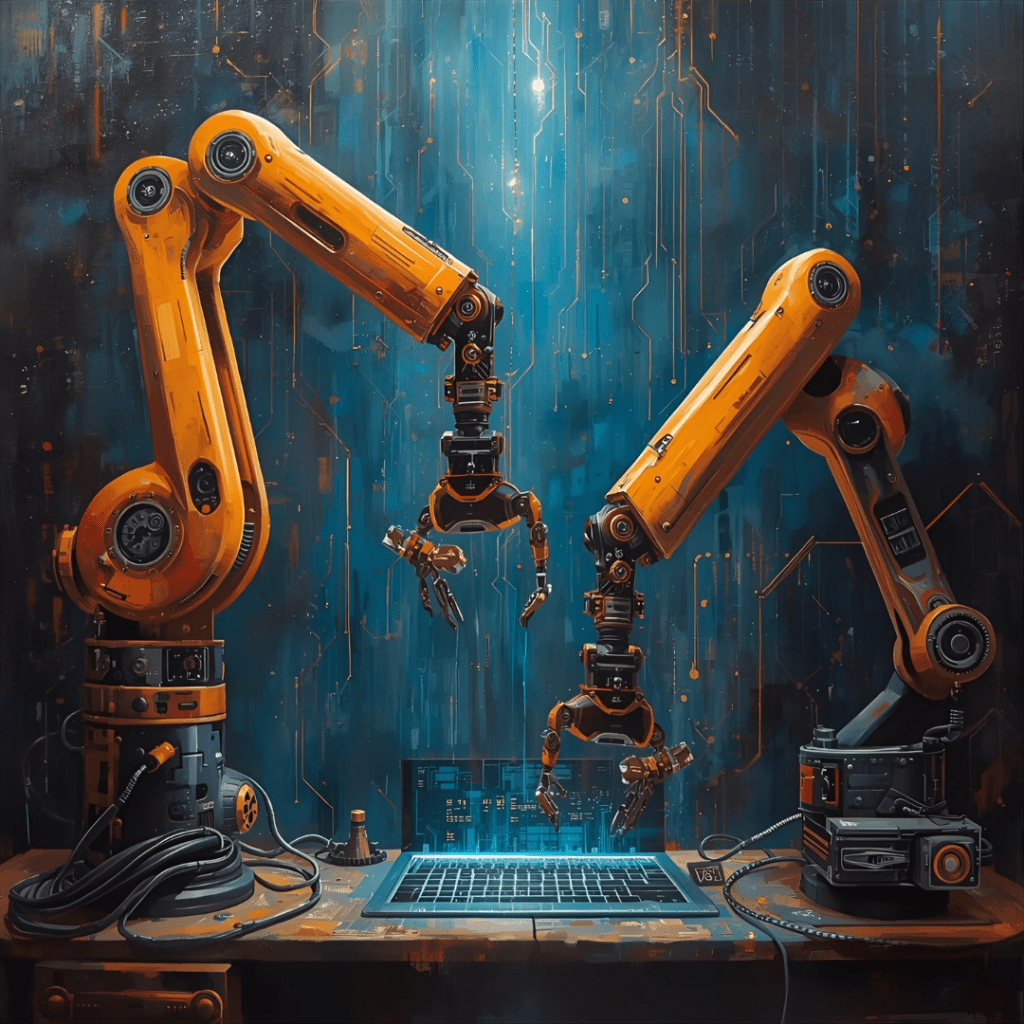
Smarter PLC Programming With AI
AI can generate ladder logic templates, optimize rungs, and identify inefficiencies. This:
- Speeds up commissioning
- Reduces control logic errors
- Improves machine uptime
It’s especially useful for repetitive automation tasks.
Robot Path Optimization Using AI
AI tools can automatically:
- Calculate optimal motion paths
- Minimize cycle time
- Prevent collisions
- Improve trajectory accuracy
Great for industrial robots, pick-and-place systems, AGVs, and CNC automation.
5. AI in Manufacturing Documentation & Engineering Workflow
Automatic Documentation Generation
AI can create:
- Bills of materials (BOM)
- Assembly instructions
- Maintenance guides
- Safety documentation
- Risk assessments
Because AI connects directly to your CAD models, any change updates the documentation automatically.
Smarter Version Control
AI detects what changed between revisions and analyzes how those changes affect fit, function, and manufacturing. This improves communication across multi-engineer teams.
6. AI for Quality Control & Machine Inspection
AI Vision Systems for Part Inspection
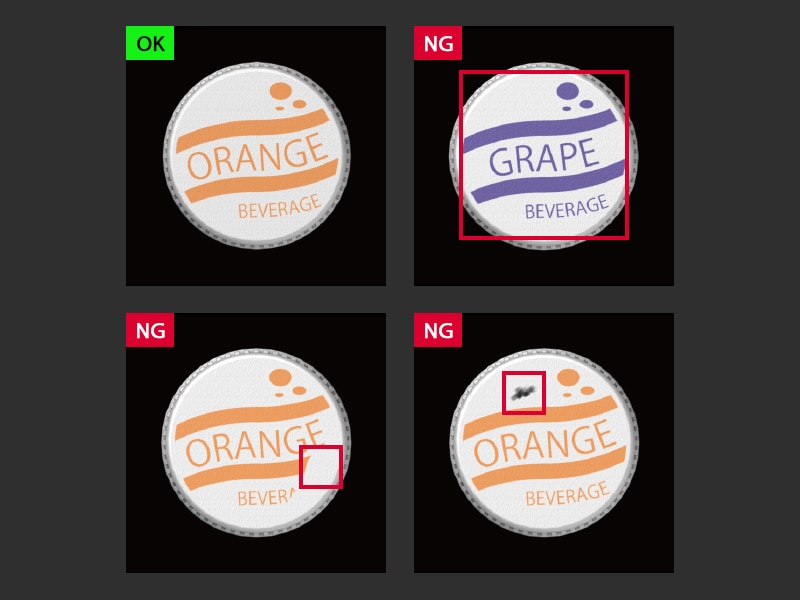
Machine vision paired with AI can detect:
- Anomaly
- Surface defects
- Welding defects
- Incorrect or incomplete assembly
- Unsuitable finishing
- Tolerance deviations
These systems outperform manual visual inspection and scale effortlessly.
Mapvision Weld Seam Inspection (WSI) is an example of a machine learning-based inspection system for weld seams.
Predicting Quality Problems Before They Occur
Machine learning analyzes real-time production data to predict:
- When parts drift out of tolerance
- When a robot or machine will produce rejects
- When a tool needs replacement
This results in consistent quality and lower scrap rates.
7. AI in Engineering Project Management
AI helps engineering teams by:
- Forecasting project delays
- Identifying bottlenecks in design reviews
- Predicting workload distribution
- Recommending priority tasks
- Improving cross-team communication
This keeps mechanical and automation projects running efficiently.
8. Conclusion: AI Is a Game-Changer for Mechanical and Automation Design
AI is reshaping the future of mechanical engineering and automation design. Instead of replacing engineers, it empowers them with:
- Faster design cycles
- Better optimization
- Higher production reliability
- Reduced commissioning time
- Clearer documentation
Mechanical engineers who adopt AI now will lead the next generation of machine design and automation.

 Industrial Machine Design & Automation
Leave a comment